What Fiber and Prebiotics Mean for a Husky's Gut Health
General nutrition information compiled from product labels and published sources, not veterinary advice. Your veterinarian is the right person to choose a diet for your dog, especially one with a health condition.
Every dog food bag makes gut promises. Words like "digestive support" and "prebiotic blend" sit next to photos of happy dogs. They tell you very little on their own.
This guide shows you how to read the label for fiber and prebiotic clues, so you can judge what the best food for dog gut health might look like for your Siberian Husky. It is a label-reading method, not a recipe. We compared label data only. We did not run feeding trials or taste tests.
First, what these terms mean
Fiber is the part of plant material that dogs do not fully digest. On a bag, you will see "crude fiber" in the guaranteed analysis. It is listed as a maximum, so the real amount can be lower.
Prebiotics are ingredients meant to feed the bacteria already living in the gut. Brands often point to things like chicory root, inulin, beet pulp or fructooligosaccharides. A brand may call an ingredient a prebiotic, but the label rarely states an amount.
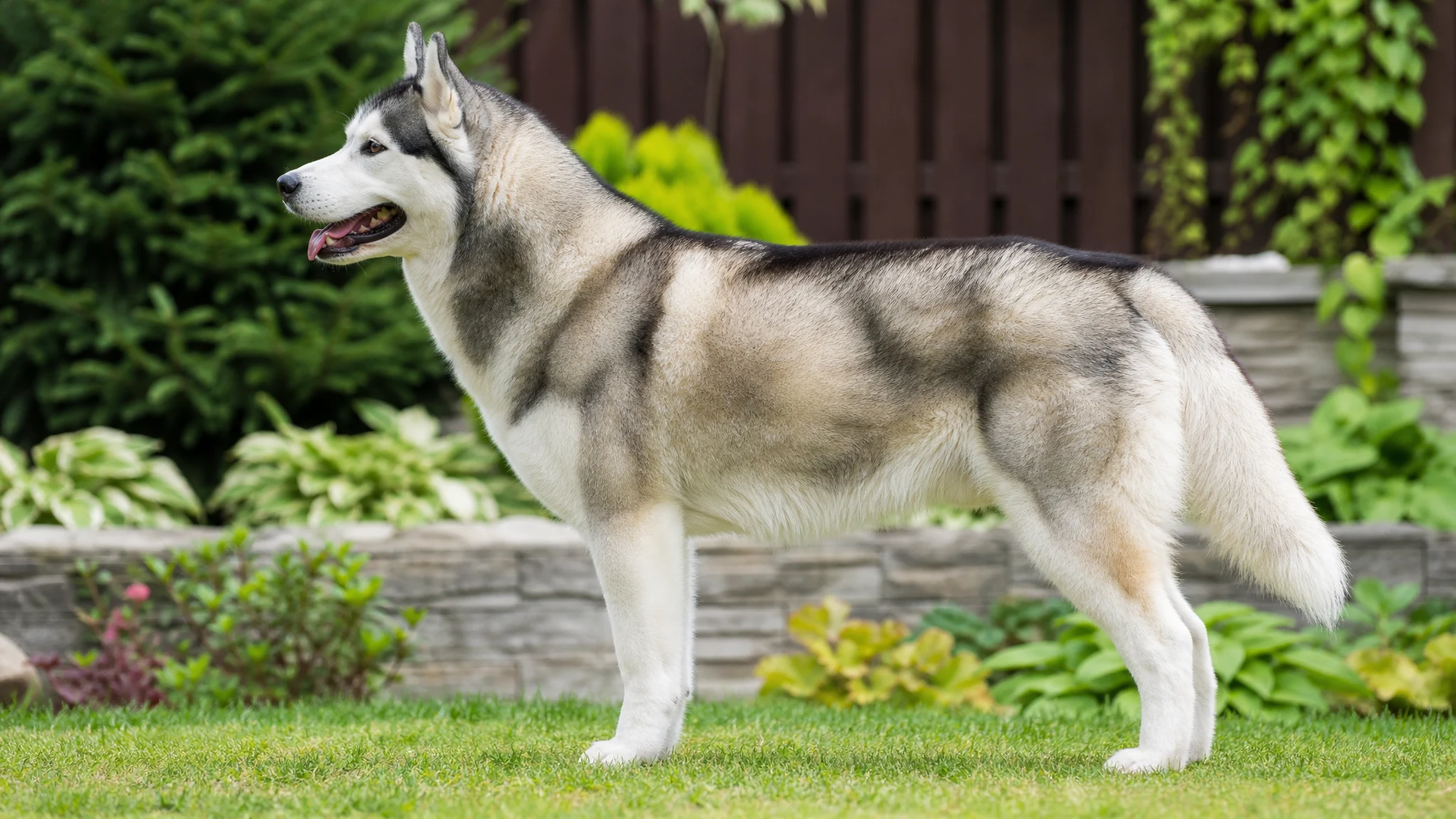
One honest limit: we found no breed-specific research on fiber or prebiotic needs for Huskies. For breed context, the Westminster Kennel Club lists the Siberian Husky as usually 40 to 50 pounds, with a listed maximum of 60 pounds. Beyond that, gut questions for your own dog belong with your veterinarian.
Materials you will need
- The bag or can of your current food, or the brand's own product page for any food you are considering
- A pen and paper, or a notes app
- Your dog's recent weight, from your vet's scale if possible
- A short stool and appetite log covering the past week
- Your veterinarian's contact details for questions
Step-by-step: how to read a food for gut clues
Step 1: Confirm the food fits your dog's life stage
Find the AAFCO statement, usually in small print near the ingredients. It tells you whether the food is for adult maintenance, growth or all life stages. A food that is wrong for the life stage is a poor starting point, however good its fiber looks.
For example, Royal Canin's Medium Adult page says it is for dogs 23 to 55 pounds as adults. Its Large Adult page is for dogs 56 to 100 pounds. Many Huskies fall in the overlap, so the brand's own feeding guidance and your vet's view on your dog's weight matter more than the name on the bag.
Step 2: Find crude fiber in the guaranteed analysis
Write down the crude fiber maximum. Here are label figures from the brand pages we reviewed:
| Food | Crude fiber on the brand page |
|---|---|
| Royal Canin Large Adult Dry | 3.2% max |
| Royal Canin Medium Adult Dry | 3.4% max |
| VICTOR Classic Hi-Pro Plus | 3.8% max |
| VICTOR Hi-Pro Plus Large Breed Puppy | 6.0% max |
| Freshpet Vital Large Breed | 1% max |
| Nom Nom Beef Mash | 4% max |
| JustFoodForDogs Beef & Russet Potato | 1.5% max |
Hill's Science Diet pages give dry matter averages instead of a guaranteed analysis. For the Adult Large Breed dry food, the average crude fiber is 1.7%. For the Puppy Large Breed dry food it is 2.8%.
Do not compare these numbers across the table as if they were equal. Fresh and wet foods contain a lot of water, and dry kibble does not. Dry matter averages and as-fed maximums are different measures. Treat the table as a way to see how much the numbers vary, not as a ranking.
Step 3: Scan the ingredient list for fiber and prebiotic sources
Ingredients are listed by weight. Look in the first several for whole grains, oats, barley, brown rice, potatoes, pumpkin or vegetables. These contribute fiber, though the label will not say how much.
For instance, Hill's lists cracked pearled barley and brown rice among the first five ingredients of its Adult Large Breed recipe. Royal Canin Large Adult starts with chicken by-product meal and brewers rice, and also lists brown rice. Freshpet's Vital Large Breed starts with chicken, beef, egg and salmon, and the recipe name mentions pumpkin and spinach.
The first five ingredients we reviewed do not name a prebiotic ingredient. If prebiotics matter to you, read the full ingredient list on the brand's own page. If the label is unclear, ask the brand directly what the prebiotic source is and how much the food contains.
Step 4: Check calories and the feeding guide
Gut upset is sometimes about how much a dog eats, not what. Note the calories per cup and read the feeding guide as a starting point.
- Royal Canin Large Adult: 360 kcal per cup
- Hill's Adult Large Breed: 365 kcal per cup
- VICTOR Classic Hi-Pro Plus: 406 kcal per cup
- Freshpet Vital Large Breed: 337 kcal per cup
A food at 406 kcal per cup is more energy dense than one at 337. The same scoop can mean noticeably different calories. Hill's says to adjust amounts to maintain optimal weight and to ask your veterinarian if unsure. Nom Nom says its daily recommendations are only a guide and may vary with age, weight and activity.
Step 5: Read the broader diet picture
Fiber is one factor among several. Protein, fat, life stage and body condition all play a part. Our guide to the diet factors that matter for this breed puts them in context.
Step 6: Change foods slowly and keep a log
If you and your vet decide to switch, do it gradually. Hill's suggests transitioning over 7 days for its puppy food, and that is a reasonable pattern to ask your vet about for any switch. Each day, note stool consistency, appetite, energy and any vomiting. A written log gives your vet something concrete to review.
Tips
- Change one thing at a time. If you swap food and add treats at once, you cannot tell which caused a change.
- Check the AAFCO wording for puppies. VICTOR Classic Hi-Pro Plus carries an exception for growth of large-size dogs (70 lb or more as an adult), so it is not meant for large-breed puppies. A Husky is under that 70 pound line as an adult by the Westminster figures, but ask your vet about growth feeding.
- Read the brand's own product page, not a third-party summary. Labels change.
- Keep treats small and consistent while you assess a new food.
Common mistakes to avoid
- Treating more fiber as better. There is no single right number for every dog, and our sources give none for Huskies.
- Trusting the word "prebiotic" on the front of the bag. Check the ingredient list for the actual source.
- Switching foods in one day. An abrupt change is a common reason for loose stools.
- Judging by grain-free marketing. The FDA has investigated a potential link between certain diets and canine dilated cardiomyopathy (DCM). Its latest update is dated December 23, 2022, and it says report counts do not establish a causal relationship. If you are weighing a grain-free diet, talk with your vet.
- Ignoring persistent symptoms. Ongoing diarrhea, vomiting, weight loss or blood in the stool need a veterinary visit, not a label change.
- Adding supplements on your own. Ask your vet before giving probiotics, fiber powders or other additions.
What results to expect
No food can be promised to fix, prevent or treat a digestive problem. Fiber and prebiotic ingredients are sometimes described as supporting normal digestion, and that is the most a label should claim.
If a food suits your dog, you may see steady appetite, consistent stools and stable weight over several weeks. You may also see none of that, and that is useful information too. Take your log to your veterinarian. A vet decides what is right for an individual dog, including whether a prescription diet is appropriate. Only a veterinarian prescribes those.
A note on the Husky and diet worries
The Siberian Husky Club of America regards canine hip dysplasia as inheritable and of utmost concern in the breed. Its page does not link the condition to fiber or gut health. Do not assume a gut-focused food says anything about joints. Ask your vet about healthy weight for your dog.
Sources
- Westminster Kennel Club, Siberian Husky breed page
- Siberian Husky Club of America, Hip Health
- FDA CVM, Investigation into Potential Link Between Certain Diets and Canine DCM
- Royal Canin, Large Adult Dry
- Royal Canin, Medium Adult Dry
- Hill's Science Diet, Adult Large Breed
- Hill's Science Diet, Puppy Large Breed
- VICTOR, Classic Hi-Pro Plus
- VICTOR, Hi-Pro Plus Large Breed Puppy
- Freshpet, Vital Large Breed
- Nom Nom, Beef Mash
- JustFoodForDogs, FreshFrozen Beef & Russet Potato