Is Iams Proactive Health a Good Fit for a Husky?
General nutrition information compiled from product labels and published sources, not veterinary advice. Your veterinarian is the right person to choose a diet for your dog, especially one with a health condition.
Iams Proactive Health dog food is a common grocery shelf choice, so Husky owners ask about it often. The honest answer is that no food is a good fit for every Husky. The better question is how to check whether this one suits your dog.
This guide walks you through that check, step by step. It uses the label, not the marketing, as the starting point. It does not give a verdict on Iams, because we did not feed or test it. The method works for any bag you are considering.
What you need before you start
- The exact Iams Proactive Health bag or the product page for the formula you are considering. Iams sells several formulas, and each has its own label.
- Your Husky's current weight, age and body condition. Your veterinarian can help you score body condition.
- A list of any health concerns, allergies or past diet problems.
- A notepad or spreadsheet to compare two or three foods side by side.
- A kitchen scale or a standard measuring cup, so portions are consistent.
First, know what a Husky is
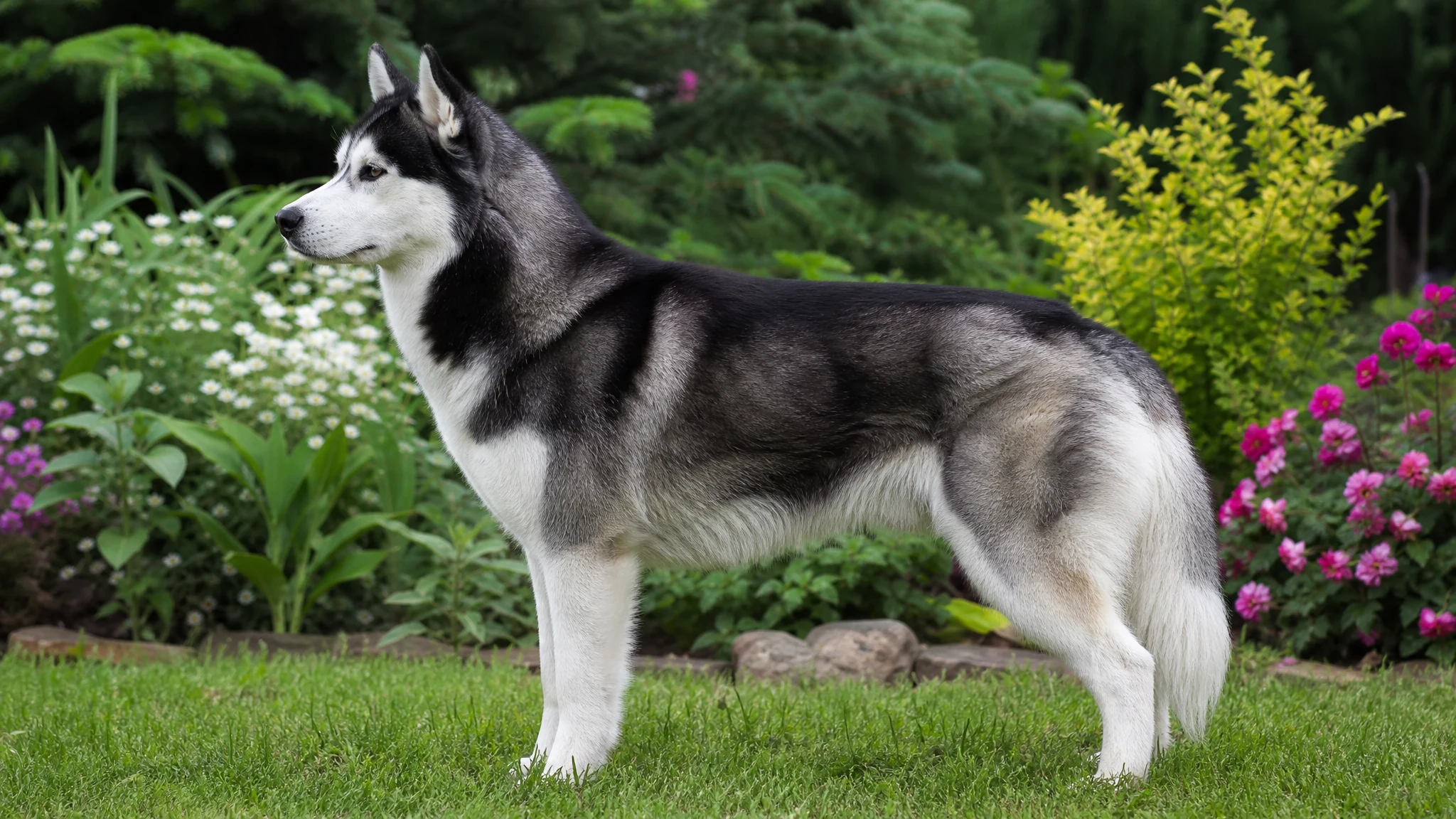
The Westminster Kennel Club breed page lists the Siberian Husky as usually 40 to 50 pounds, with a listed maximum of 60 pounds. The same page gives a maximum life expectancy of 14 years.
That puts most Huskies in the medium range. They sit below the 70 pound adult weight mentioned in the AAFCO large-size growth wording. Check the Westminster page or your breeder for how big your own dog's parents were. Guessing from the breed average alone can mislead you.
Step 1: Confirm the life stage on the bag
Start with the nutritional adequacy statement. This is the small block of text, usually near the guaranteed analysis, that begins with something like "formulated to meet the nutritional levels established by the AAFCO Dog Food Nutrient Profiles."
Look for the life stage it names:
- Maintenance means adult dogs only.
- Growth means puppies.
- All life stages means puppies and adults.
An adult Husky needs a maintenance or all-life-stages statement. A puppy needs growth or all life stages. If the bag does not say, do not guess. Check the Iams website or contact the company.
Also note whether the statement says the food was tested in feeding trials or formulated on paper to meet the profiles. Both are legitimate. They are different claims, and the label says which one applies.
Step 2: Check the large-size growth clause for puppies
Some growth and all-life-stages labels add the phrase "including growth of large-size dogs (70 pounds or more as an adult)," according to Whole Dog Journal's explainer on adequacy statements. Other foods carry an exception saying they do not cover growth of large-size dogs.
A Husky is expected to stay under 70 pounds as an adult, so that clause is not required for the breed. Still, read the statement so you know exactly what the food was designed for. If your puppy is from larger lines, ask your veterinarian.
Step 3: Read the first five ingredients
Ingredients are listed by weight before cooking. The first five tell you the main building blocks of the food.
Write them down. Note whether the first ingredient is a named meat, a meat meal or a by-product meal. None of these is automatically good or bad. A named meat contains a lot of water. A meal is concentrated. What matters is that the list is clear and that nothing on it is a known problem for your dog.
Be skeptical of front-of-bag claims. Words like "proactive," "natural" or "premium" are not defined by the AAFCO statement. The statement and the ingredient list are what you can actually compare.
Step 4: Compare protein, fat and calories
Find the guaranteed analysis and the calorie statement, usually listed as kcal per cup or per kilogram. Huskies vary a lot in activity, so calories matter more than the protein percentage alone.
For context, here are label figures from other brands' own product pages. They are reference points, not recommendations.
| Food | Label calories | Protein (min) | Fat (min) |
|---|---|---|---|
| Royal Canin Medium Adult (23 to 55 lb adults) | 340 kcal ME per cup | 23% | 12% |
| Royal Canin Large Adult (56 to 100 lb adults) | 360 kcal ME per cup | 24% | 15% |
| VICTOR Classic Hi-Pro Plus | 406 kcal per cup | 30% | 20% |
Hill's Science Diet Adult Large Breed lists 365 kcal per cup, but its page gives dry matter averages instead of guaranteed minimums, so it is not directly comparable on protein or fat. This is a good reminder to compare like with like.
Put the Iams numbers in the same format as the others. If the Iams label states percentages as fed, do not compare them to a dry matter figure.
Step 5: Use the feeding guide only as a starting point
Every brand's feeding chart is a starting estimate. Hill's says to adjust amounts to maintain optimal weight and to ask your veterinarian if you are unsure. Royal Canin says its table is only a guide.
Start with the amount on the Iams bag for your Husky's target weight. Then weigh your dog every two to three weeks and check body condition. Adjust in small steps. Your veterinarian decides what is right for your individual dog.
Step 6: Consider your dog's health, with your veterinarian
The Siberian Husky Club of America regards canine hip dysplasia as inheritable and of utmost concern in the breed. It reports that the OFA evaluated 12,087 Huskies from 1994 to 1998, and 2.2% were dysplastic. That is an older figure, and the club's page does not say what role diet plays.
So do not expect any food, including this one, to prevent or treat a joint condition. If your dog has a diagnosed problem, your veterinarian may recommend a specific diet. Prescription diets are only something a veterinarian prescribes.
On heart health, the FDA has investigated a possible link between certain diets and canine dilated cardiomyopathy. Its latest update was December 23, 2022, and it said report counts do not establish a causal relationship. It also said it does not plan more public updates until there is meaningful new scientific information. If you have questions about a specific food, ask your veterinarian and check the FDA page for anything newer.
For more on the factors that shape a Husky's diet, see our guide to Husky nutrition and the diet factors that matter for this breed.
Step 7: Transition slowly and watch
If you decide to try the food, switch gradually over about a week. Hill's recommends a 7 day transition for its puppy food, and that is a sensible pace for most changes. Mix a little new food into the old, then increase the share each day.
During and after the switch, watch for:
- Stool quality and regularity
- Itching, ear trouble or skin changes
- Appetite and energy
- Weight and body shape
Call your veterinarian if anything worries you.
Tips and common mistakes
- Judging by the brand, not the formula. Check the exact Iams formula and life stage, not the line in general.
- Feeding by the bag alone. A Husky who is very active in winter may need more than one who is mostly a house dog. Adjust to body condition.
- Skipping the adequacy statement. A food made for adults is not the right basis for a growing puppy.
- Comparing different measurements. As fed and dry matter numbers are not the same.
- Switching too fast. A sudden change often upsets digestion.
- Counting treats as free. Treats add calories. Subtract them from meals.
- Trusting a ranking. Lists that call a food the best usually do not show their method.
What results to expect
If the food suits your dog, you may notice steady energy, a healthy body weight, firm stools and a good appetite over several weeks. Those are signs of a good match, not proof the food does anything special. Every dog responds differently, and nothing here is a guarantee.
If you see loose stools, itching or weight drift, the food may not suit your dog. Talk to your veterinarian before changing again.
How we compared
We compared label data published by the brands. We did not run feeding trials or taste tests. We also do not have a reviewed Iams label to quote here, so we do not state its ingredients, calories or analysis. Check the Iams website or the bag for those, then run the steps above.
Sources
- Westminster Kennel Club, Siberian Husky breed page
- Siberian Husky Club of America, Hip Health
- Whole Dog Journal, In the Fine Print: Nutritional Adequacy Statements
- FDA CVM, Investigation into Potential Link Between Certain Diets and Canine DCM
- Royal Canin USA, Medium Adult Dry
- Royal Canin USA, Large Adult Dry
- Hill's Pet Nutrition, Science Diet Adult Large Breed
- VICTOR Pet Food, Classic Hi-Pro Plus