Dog Probiotics for Gut Health: What the Evidence Says for Huskies
General nutrition information compiled from product labels and published sources, not veterinary advice. Your veterinarian is the right person to choose a diet for your dog, especially one with a health condition.
Probiotic chews, powders and "gut health" kibble are everywhere, and the marketing is loud. If you share your home with a Siberian Husky, you may wonder whether dog probiotics for gut health are worth adding to the bowl.
This guide is a careful, step-by-step way to decide. It does not sell a product and it does not promise results. It shows you how to read a label, what to ask your veterinarian, and how to change your dog's diet without making things worse.
What we can and cannot say about Huskies and probiotics
Start with honesty about the evidence. We looked for breed-specific research on probiotics in Siberian Huskies and did not find any we could responsibly cite. Whether a probiotic helps a particular Husky is a question for your veterinarian, who knows your dog's history.
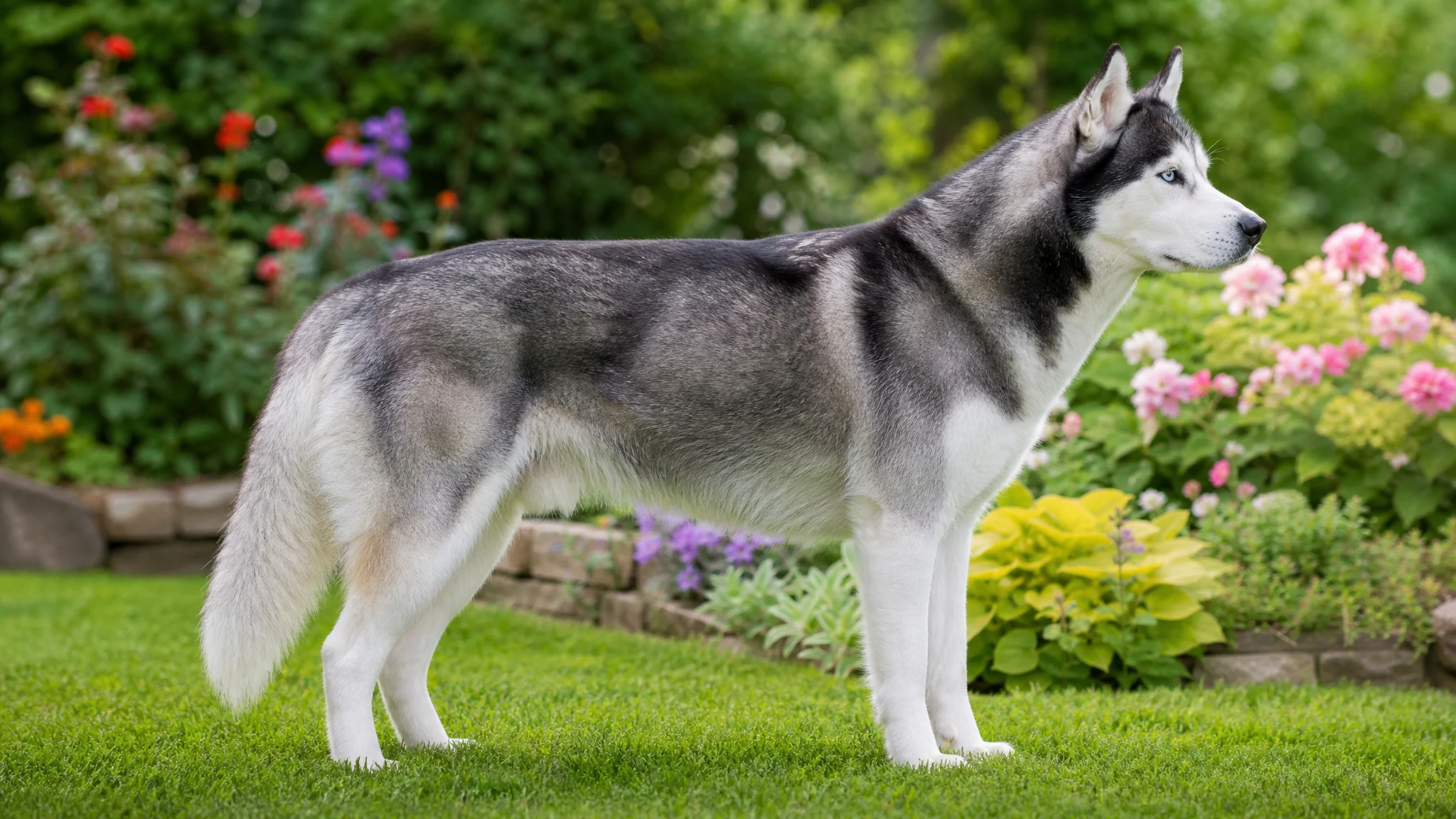
What we can say about the breed comes from named sources. The Westminster Kennel Club breed page lists the Siberian Husky as usually 40 to 50 pounds, with a listed maximum of 60 pounds. That puts most Huskies in the medium range, so size-based feeding choices are different from those for a giant breed.
For breed-specific questions, the Siberian Husky Club of America is a good place to ask. For more on how diet fits the breed overall, see our guide to Husky nutrition and the diet factors that matter for this breed.
A note on method: when we compare foods, we compare label data published by the brands. We did not run feeding trials or taste tests, and we have not fed any of these products to dogs.
What you need before you start
- Your Husky's current food bag or can, with the full ingredient list and the nutritional adequacy statement.
- A short written record of your dog's stool, appetite, energy and any vomiting over the last two weeks.
- A list of everything else your dog eats: treats, chews, table scraps, medications and supplements.
- Your dog's current weight, since the Westminster range is a general guide and individual Huskies vary.
- An appointment, call or message to your veterinarian.
- A measuring cup or kitchen scale, so any change is gradual and measured.
Step-by-step: deciding whether to try a probiotic
Step 1: Define the reason you are considering one
"Gut health" is vague. Write down what you actually see. Is it soft stool after a diet change? Gas? Occasional loose stool when you travel? A one-line description helps your veterinarian far more than a brand name does.
Some digestive signs are not a supplement question at all. Repeated vomiting, blood in the stool, black stool, a swollen belly, lethargy or refusing food all call for a veterinary visit, not a trial of a new product.
Step 2: Rule out the simple causes first
Many stomach upsets trace back to something ordinary: a sudden food switch, a new chew, rich table scraps, or overfeeding. Look at your records. If the upset started right after a change, undoing the change may matter more than adding anything.
Also check the portion. Feeding guides on the bag are starting points only. Hill's Science Diet, for example, tells owners to adjust amounts as needed to maintain optimal weight and to ask a veterinarian if unsure. The same logic applies to any food.
Step 3: Ask your veterinarian specific questions
Bring your notes and ask:
- Could my dog's signs have a medical cause that needs testing?
- Is a probiotic reasonable for this dog, and is there a type you recommend?
- How long should I try it before deciding it is not helping?
- Are there health conditions or medications that make it a poor idea?
Let your veterinarian set any amount. We do not give doses here, and the number on a product label is not tailored to your dog.
Step 4: Read the label like a skeptic
If your veterinarian is open to a probiotic, read what the product actually states. Look for:
- Named organisms. Vague phrases like "probiotic blend" tell you little. A named genus, species and strain is more specific.
- A count at the end of shelf life. Some labels give counts only at the time of manufacture.
- The intended species. A product made for people is not the same as one made for dogs.
- Storage instructions. Some products need refrigeration.
- Contact information for the company. A real brand will answer questions about testing.
Be wary of any package that says it treats, prevents or cures a condition. That is a medical claim, and a food or supplement label is not where to look for one. If a brand says its food contains added probiotics, check the brand's own product page and ask the company what organisms and amounts it uses.
Step 5: Consider the food itself
Sometimes the better question is whether the base diet suits your dog. Foods differ in ingredients, calories and life-stage statements. A few examples drawn from the brands' own pages:
- Royal Canin's Medium Adult Dry is designed for adult dogs of 23 to 55 pounds and lists 340 kcal ME per cup, calculated. Its first ingredients are brewers rice, chicken by-product meal, oat groats, wheat and corn protein meal.
- Hill's Science Diet Adult Large Breed is aimed at dogs with an ideal weight of 55 to 110 pounds. It lists 365 kcal per cup and begins with chicken, cracked pearled barley and brown rice.
These are label facts, not recommendations. Most Huskies fall between the two size ranges, and the brands' size ranges are guides. Your veterinarian can help match a food to your individual dog. Check each brand's page to see whether the food contains any added probiotics, because we are not claiming either way.
Step 6: Introduce one change at a time
If you add a probiotic, do not also switch food, treats and chews that same week. When several things change together, you cannot tell what caused a good or bad response.
Hill's suggests transitioning to a new food over 7 days on its large breed puppy page. A gradual shift is a sensible habit for any food change. Follow your veterinarian's directions for the probiotic itself.
Step 7: Keep notes and set a review date
Record stool quality, appetite, gas and energy daily. Agree on a review point with your veterinarian. If nothing improves, or if things get worse, stop and call the clinic rather than trying something new on your own.
Tips that help
- Keep treats simple while you are watching your dog's digestion.
- Weigh your dog every few weeks. Changes in weight tell you something that stool notes cannot.
- Take photos of the label and lot number of anything you start. If there is a reaction, your veterinarian will want them.
- Keep the Husky's activity level in mind. Active dogs and couch dogs need different amounts of food, and the guide on the bag assumes an average.
- Store products as the label directs, away from heat.
Common mistakes to avoid
- Starting a probiotic to mask a symptom. Ongoing loose stool deserves a diagnosis first.
- Assuming "natural" means safe. The word has no strict meaning on a pet product label.
- Changing everything at once. You lose the ability to tell what worked.
- Using human products without asking. Ingredients such as sweeteners may not suit dogs.
- Treating a grain-free label as a gut-health claim. The FDA has been investigating a potential link between certain diets and canine dilated cardiomyopathy. Its most recent update on that page is dated December 23, 2022, and the agency says report counts do not establish a causal relationship. If you are weighing diet types, talk to your veterinarian.
- Giving up after two days or expecting overnight change. Stick to the review date you agreed on.
What results to expect
Honest expectations are modest. Some owners report firmer stools or less gas when they pair a sensible diet with a probiotic chosen for their dog. Others see no difference. Individual dogs vary, and a change in stool may simply reflect a steadier routine.
A probiotic may support digestive comfort in some dogs, but it is not a treatment for any disease, and no product can promise an outcome. Do not use a probiotic in place of veterinary care.
On breed-specific health, the Siberian Husky Club of America discusses hip dysplasia as an inheritable concern in the breed. Its page does not link that condition to probiotics or gut health, so do not read a probiotic as a substitute for the screening and weight management your veterinarian discusses.
When to stop and call your veterinarian
- Vomiting, bloody or black stool, or diarrhea lasting more than a day or so.
- A swollen or painful belly.
- Marked tiredness or loss of appetite.
- Any sign of an allergic reaction, such as facial swelling or hives.
These signs call for professional advice, not another trial product.
The short version
Describe the problem, rule out simple causes, ask your veterinarian, read the label closely, change one thing at a time, and keep notes. That process will tell you more about your Husky than any product claim will.
Sources
- Westminster Kennel Club, Siberian Husky breed page
- Siberian Husky Club of America, Hip Health
- FDA Center for Veterinary Medicine, Investigation into Potential Link Between Certain Diets and Canine DCM
- Royal Canin USA, Medium Adult Dry
- Hill's Pet Nutrition, Science Diet Adult Large Breed
- Hill's Pet Nutrition, Science Diet Puppy Large Breed