Preparing a Husky's Meals: A Step-by-Step Feeding Routine
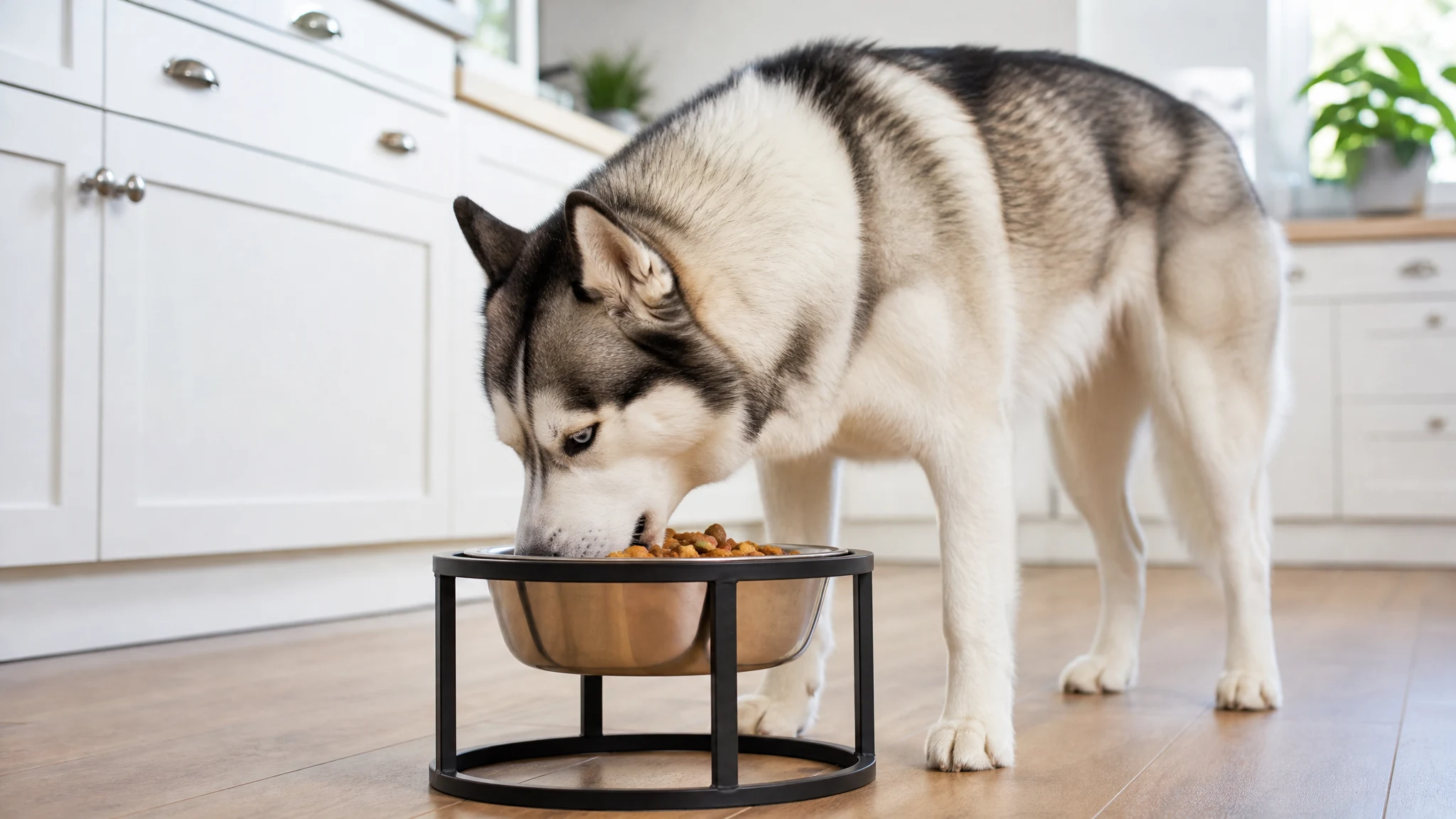
General nutrition information compiled from product labels and published sources, not veterinary advice. Your veterinarian is the right person to choose a diet for your dog, especially one with a health condition.
A steady routine makes dog feeding preparation easier and helps you notice changes in your Husky early. This guide walks through measuring, serving and adjusting meals, one step at a time.
We compared label data from the brands named below. We did not run feeding trials or taste tests, and we did not feed any of these foods ourselves. Treat every amount here as a starting point, not a prescription.
What You Need Before You Start
- The food you have chosen, with the bag or can label in reach.
- A kitchen scale. Royal Canin's Medium Adult page says grams are the most accurate form of measurement, and that cup amounts are only close estimates.
- A standard dry measuring cup, if you do not weigh food.
- A clean stainless steel or ceramic bowl and a separate water bowl.
- An airtight container for dry food, plus fridge or freezer space if you feed fresh food.
- A notebook or phone note to record your dog's weight, amounts and appetite.
Step 1: Know Your Dog's Starting Numbers
Weigh your dog first. The Westminster Kennel Club says a Siberian Husky usually weighs 40 to 50 pounds, with a listed maximum of 60 pounds. Your own dog may fall outside that range, so use the real number from your scale or your vet's clinic.
Also note age and activity level. Brand feeding charts, such as the Royal Canin table that sorts by target adult weight and activity (low, moderate or high), use these inputs. Westminster's page does not say when a Husky counts as an adult, so ask your veterinarian when to move from puppy food to adult food.
For a full breakdown by life stage, see our guide on how much to feed a Husky by age and weight.
Step 2: Read the Label Before You Pour
Two parts of the label matter most for preparation.
The first is the AAFCO statement. It says which life stage the food is formulated for. For example, Royal Canin's Large Puppy page says it meets AAFCO profiles for growth, including large-size dogs of 70 pounds or more as an adult. VICTOR's Classic Hi-Pro Plus is labeled for all life stages except growth of large-size dogs. A Husky is usually under 70 pounds as an adult, so that large-size wording is not required for the breed, but the life-stage match still matters.
The second is calories per cup. Foods differ a lot. Royal Canin lists Medium Adult at 340 kcal ME per cup and Large Adult at 360. VICTOR lists Classic Hi-Pro Plus at 406 kcal per cup. Nom Nom lists Beef Mash at 201 kcal per cup. A cup of one food is not a cup of another, so never swap foods and keep the same scoop.
Step 3: Find the Label's Starting Amount
Find your dog's weight on the brand's own chart and read the daily amount. Then treat it as a first guess.
- Dry foods: Royal Canin and VICTOR both give daily tables by weight, and VICTOR's puppy page uses a standard 8 ounce measuring cup. Hill's Science Diet pages tell you to adjust amounts to maintain optimal weight and to ask your veterinarian if unsure.
- Fresh foods: Freshpet's Vital Large Breed page lists 2 1/2 to 3 cups per day for dogs of 51 to 65 pounds, fed as one meal or divided into two. That range does not cover a 45 pound Husky, so check the brand's chart for your dog's weight rather than guessing.
- Frozen fresh foods: Nom Nom says its daily recommendations are only a guide and may vary with age, weight and activity. JustFoodForDogs lists its Beef & Russet Potato recipe for adult maintenance and says growing puppies are not a fit.
If a chart does not list your dog's weight, or the chart is an image you cannot read, contact the brand or your vet. Do not extrapolate.
Step 4: Split the Day's Food Into Meals
The sources we reviewed do not set one schedule for Huskies. Freshpet's page allows one meal or two. For other foods, check the brand and ask your vet which pattern suits your dog's age and health.
Whatever you choose, write the daily total first, then divide it. This stops the common mistake of filling the bowl "by eye" at each meal.
Step 5: Measure and Serve
- Place the bowl on the scale and zero it, or level a dry measuring cup with a flat edge.
- Portion the meal. Weigh it if you can.
- For fresh or frozen food, follow the brand's thaw and storage directions from its own page or packaging. We have not listed them because they differ.
- Serve at the same times each day, in a calm spot.
- Lift the bowl after the meal and wash it. Refill the water bowl.
Step 6: Switch Foods Slowly
If you change foods, do it gradually. Hill's Science Diet's large breed puppy page recommends a transition over 7 days. For other brands, follow the instructions on the package or ask your vet. Mixing old and new food in shifting proportions is the usual approach.
Step 7: Track and Adjust
Record your dog's weight every few weeks, plus how the dog looks and feels. Because the label is only a starting point, adjust the amount in small steps if your dog gains or loses weight, and tell your vet about changes. Huskies vary in activity, and the label cannot see that.
Common Mistakes to Avoid
- Using a coffee mug or random scoop. A cup of food can vary in weight. Use a measuring cup or a scale.
- Applying a large-breed chart by default. Royal Canin's Large Adult formula is aimed at dogs of 56 to 100 pounds adult weight, while its Medium Adult is aimed at 23 to 55 pounds. A typical Husky sits near the boundary, so match the product to your own dog's weight and your vet's advice.
- Counting only the bowl. Treats and chews add calories. Keep them small and note them in your log.
- Changing foods quickly. A rushed switch can upset the stomach.
- Ignoring the life stage on the label. A food labeled for adult maintenance is not meant for a growing puppy. JustFoodForDogs says this about its own recipe.
- Judging a food by marketing words. Look at the AAFCO statement, ingredient list and calories instead.
Health Questions and Your Vet
The Siberian Husky Club of America describes canine hip dysplasia as inheritable and a serious concern in the breed. Its hip health page does not say that any food prevents or treats it. If your dog has hip, skin, digestive or heart concerns, ask your veterinarian before choosing amounts or a food. Prescription diets are something only a veterinarian prescribes.
On grain-free and boutique diets, the FDA's page on canine dilated cardiomyopathy says its report counts do not establish a causal relationship, and the agency's latest update on that page is dated December 23, 2022. Check the FDA page for anything newer, and talk to your vet about your own dog.
If you want to add a supplement, ask your vet first. We give no doses here, and the right amount depends on the dog and the product.
For a dog with any health condition, confirm the daily amount with your vet instead of relying on a bag chart.
What Results to Expect
A steady routine may help you keep a Husky at a healthy weight and spot appetite changes sooner. Many owners find that measured meals make it easier to see whether a dog is eating as usual. Results vary by dog, and no feeding routine can promise a particular outcome. Your vet's body condition check is the best way to know whether the amount is working.
Quick Daily Checklist
- Daily total decided from the label and your vet's advice.
- Food measured by weight or a level cup.
- Meals served at set times, with fresh water available.
- Treats counted.
- Weight and appetite noted in your log.
Sources
- Westminster Kennel Club, Siberian Husky breed page
- Siberian Husky Club of America, Hip Health
- FDA CVM, Investigation into Potential Link Between Certain Diets and Canine DCM
- Royal Canin, Medium Adult Dry
- Royal Canin, Large Adult Dry
- Royal Canin, Large Puppy Dry
- Hill's Science Diet, Puppy Large Breed
- VICTOR, Classic Hi-Pro Plus
- VICTOR, Hi-Pro Plus Large Breed Puppy
- Freshpet, Vital Large Breed recipe
- Nom Nom, Beef Mash
- JustFoodForDogs, FreshFrozen Beef & Russet Potato