Feeding Stations for Huskies: What to Look for in a Bowl Setup
General nutrition information compiled from product labels and published sources, not veterinary advice. Your veterinarian is the right person to choose a diet for your dog, especially one with a health condition.
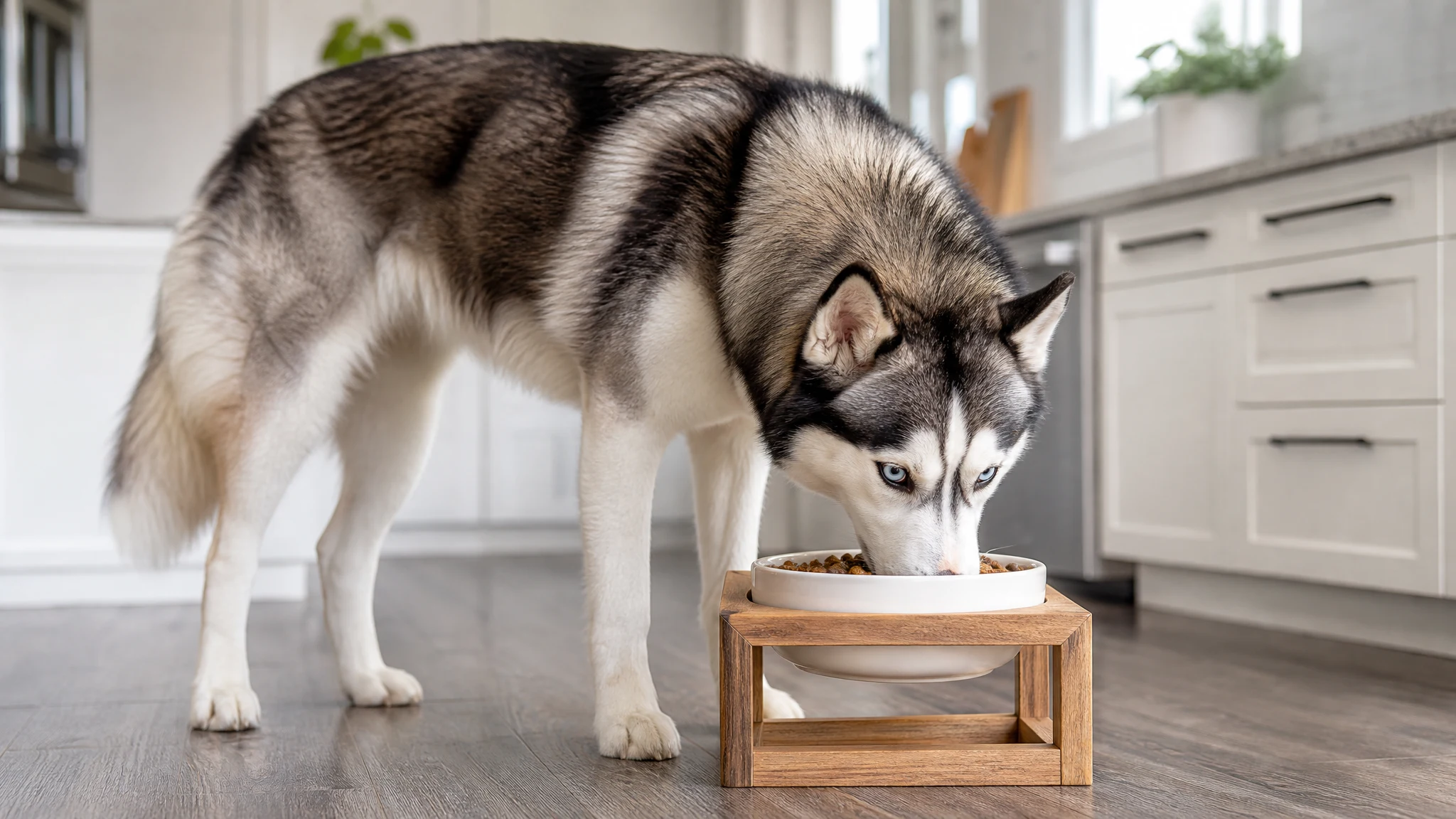
A dog feeding station is the spot where food and water live: the bowls, the mat under them, and the corner of the room they sit in. For a Husky, a good setup makes meals calmer and cleaner. It also makes it easier to see how much your dog eats.
This guide walks through building one, step by step. It covers the setup only. For how much food to put in the bowl, see our Husky feeding chart by age and weight.
What you need
- One food bowl and one water bowl, or a double bowl set
- A non-slip, wipe-clean mat
- A measuring cup or a kitchen scale
- A dry, lidded container for kibble (if you feed dry food)
- A spot in your home with a flat floor and some quiet
- Your food's feeding guide, from the bag, can or brand website
You do not need a gadget. Most of what matters is size, stability and location.
Step 1: Start with your dog's weight, not the bowl's label
Bowl sizes are marketed loosely, so begin with the dog. The Westminster Kennel Club lists the Siberian Husky as usually 40 to 50 pounds, with a listed maximum of 60 pounds. Your dog may be lighter or heavier than that, so weigh your own dog if you can.
Why does weight matter for a bowl? It tells you the size of the meals you will pour. A bowl that is too small makes kibble spill. A bowl that is far too big can make a small meal look like nothing. Pick a bowl that holds one meal with room to spare, not a day's food.
Step 2: Choose the bowl material and shape
Look for a bowl that is heavy enough, or has a grip base, so it does not slide when your dog pushes it. A bowl that skates across the floor turns every meal into a chase.
Check these points:
- Surface: smooth, with no deep scratches or cracks where food residue can sit.
- Cleaning: dishwasher-safe or easy to scrub by hand.
- Edges: a slight lip helps keep wet food and fresh food inside the bowl.
- Width: wide enough that your dog can reach food without cramming a muzzle into a corner.
Be skeptical of bowl packaging that promises health benefits. A bowl holds food. It does not treat or prevent a medical condition. If you wonder whether a certain bowl style suits your dog, ask your veterinarian.
Step 3: Decide on bowl height
Many owners use a stand to raise the bowls. Others put them on the floor. Both are common, and you will see strong opinions online.
Here is the careful position. We did not test bowl heights ourselves, and we found no source in our research that settles the question for Huskies. Raised bowls are sometimes discussed in connection with bloat, so do not pick a height based on a blog post, including this one. Ask your veterinarian which height suits your dog, especially if your dog has a health history.
If you do use a stand, make sure it is stable, with no wobble when your dog leans in.
Step 4: Pick the location
Put the station where your dog can eat without being stepped around. A corner of the kitchen or a utility room often works. Avoid the doorway and the busiest hallway.
- Choose a flat spot on a hard floor, or lay the mat on carpet.
- Keep the water bowl in the same place each day so your dog always knows where to find it.
- Keep the station away from the trash can and from the spot where you drop dishes or cook.
- If you share your home with other pets or small children, leave a little space between bowls and give your dog an undisturbed corner.
Step 5: Add the mat and the storage
A mat protects the floor and gives the bowls something to grip. Pick one with a raised edge if your dog tends to splash water. Wipe it down on a regular schedule.
If you feed dry food, keep it in a dry, closed container. Keep the original bag's label information handy too. It carries the lot code, the nutritional adequacy statement and the feeding guide. Many owners tape the feeding guide inside the cabinet door so it is always at hand.
Step 6: Measure each meal
A bowl is not a measuring cup. Scoop with a measuring cup, or better, weigh the food on a kitchen scale. Royal Canin's own product page says grams are the most accurate form of measurement, and that cup figures are given to the closest proximity.
Feeding guides are starting points. Here is how a few brands describe theirs:
- The Royal Canin Large Adult Dry page offers a daily feeding table by target adult weight and activity level (low, moderate, high). That product is made for dogs with an adult weight of 56 to 100 pounds. The Medium Adult Dry page covers adult weights of 23 to 55 pounds. A Husky could fall into either range, so match the product to your own dog's weight.
- The Hill's Science Diet Adult Large Breed page says to adjust feeding amounts as needed to maintain optimal weight, and to ask your veterinarian if you are unsure.
- The Freshpet Vital Large Breed page lists 2 1/2 to 3 cups per day for dogs of 51 to 65 pounds, served as one meal or split in two.
Those figures apply only to those products. They are not a rule for every food. The same cup of a different food can carry a very different number of calories, so always use the guide for the food in your bowl.
We compared label data from these pages. We did not run feeding trials or taste tests.
Step 7: Set the schedule and watch your dog
The Freshpet page above notes that meals can be given once a day or divided into two. Many owners prefer to split the daily amount so meals are smaller. Your veterinarian can tell you which pattern suits your dog.
Pick set meal times and pick up the bowl after a reasonable window. Then watch for a few things:
- Does your dog finish the meal, or walk away from it?
- Does your dog gulp so fast that food comes back up?
- Is your dog's weight steady over several weeks?
Write these notes down. They are useful to bring to a vet visit.
Tips for a better setup
- Wash bowls daily. Food residue builds up quickly, and fresh or wet food leaves more of it.
- Refresh water often. Keep the water bowl full and clean.
- Change one thing at a time. If you swap the bowl, the spot and the food all at once, you will not know what caused a problem.
- Transition foods slowly. Hill's, for example, suggests a 7-day transition on its large breed puppy page.
- Use the bowl for feeding only. Use a separate mat or towel for training treats.
Common mistakes to avoid
- Using a bowl that slides. It makes eating messy and may stress some dogs.
- Free-feeding without measuring. A full bowl left out all day hides how much your dog is really eating.
- Treating the cup line as exact. Cup marks on a bowl are rough. Use a real measuring cup or scale.
- Picking a stand because of a headline. See Step 3 and ask your veterinarian.
- Trusting the bag's guide for a dog with a health condition. For a dog with a medical issue, confirm amounts with your vet.
- Scolding at mealtime. If your dog seems tense about food, do not punish. Keep the area calm and ask your vet or a reward-based trainer for help, in line with American Veterinary Society of Animal Behavior (AVSAB) guidance.
What to expect
A steady setup may make mealtimes quieter and cleaner, and it may make portions easier to track. It will not change your dog's health on its own, and no bowl can promise a result.
Over a few weeks, you can reasonably expect a clear routine and better notes on appetite and weight. If your dog's appetite, weight or eating habits change, call your veterinarian. A veterinarian decides what is right for an individual dog, including any prescription diet.
For hip health, the Siberian Husky Club of America regards canine hip dysplasia as inheritable and of utmost concern in the breed. Its hip health page does not state a diet link, so do not assume a food or a bowl setup affects it. Ask your veterinarian about weight goals for your dog.
Quick checklist
- Weigh your dog and note the target weight.
- Pick a stable, easy-to-clean bowl.
- Ask your vet about bowl height.
- Set the station in a calm, flat spot.
- Add a mat and a lidded food container.
- Measure each meal by weight or with a real measuring cup.
- Keep notes and adjust with your vet's guidance.
Sources
- Westminster Kennel Club, Siberian Husky breed page
- Siberian Husky Club of America, Hip Health
- Royal Canin USA, Large Adult Dry
- Royal Canin USA, Medium Adult Dry
- Hill's Pet Nutrition, Science Diet Adult Large Breed
- Hill's Pet Nutrition, Science Diet Puppy Large Breed
- Freshpet, Vital Large Breed recipe