Dog Food for Skin Allergies: What to Look for on a Husky's Label
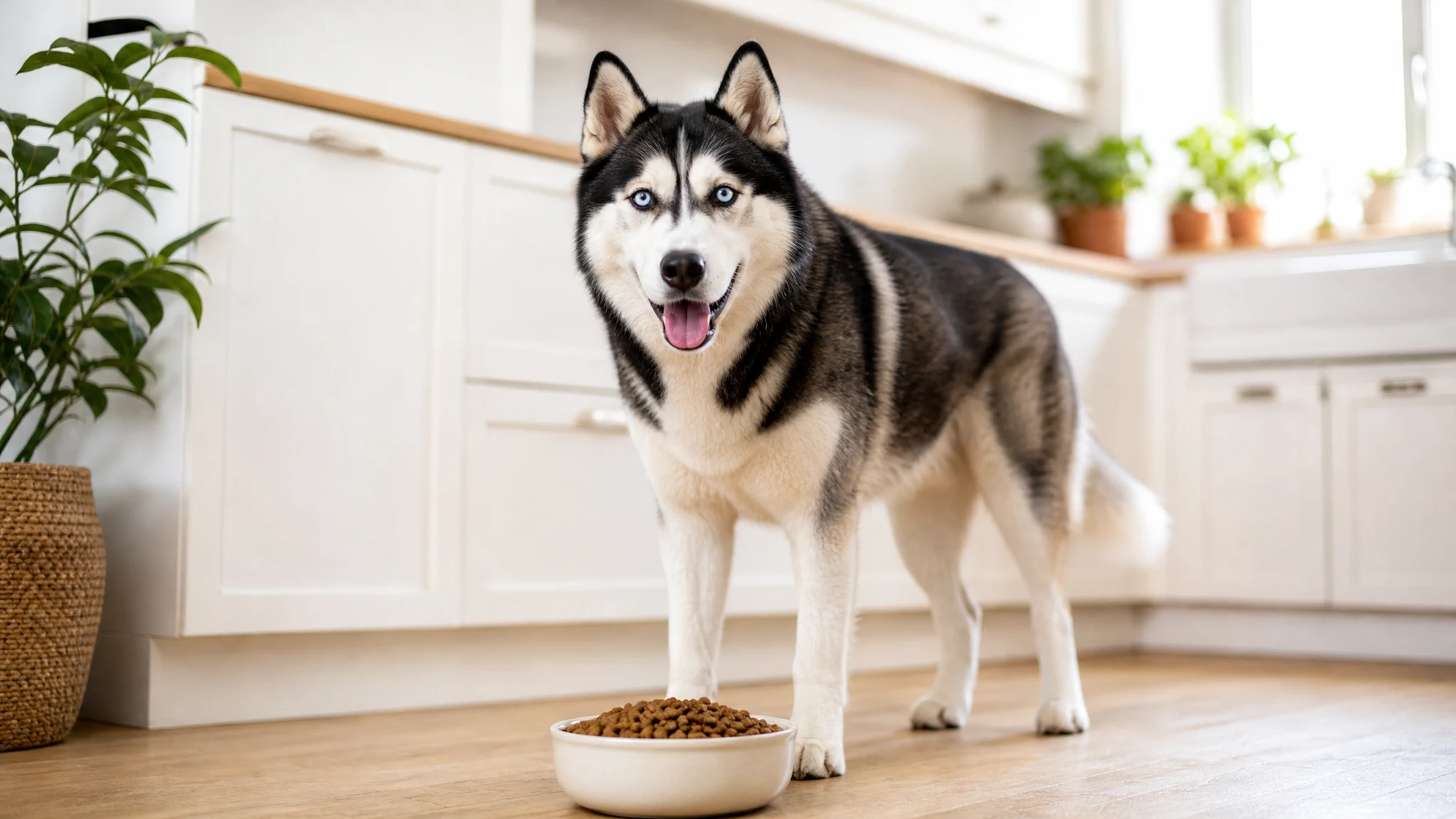
General nutrition information compiled from product labels and published sources, not veterinary advice. Your veterinarian is the right person to choose a diet for your dog, especially one with a health condition.
Itchy skin in a Husky is frustrating, and food is often the first thing owners suspect. A label can't diagnose anything, though. It can show you what is in the bag, which helps you and your veterinarian make a plan.
This guide shows how to read a label step by step. There is no single best dog food for skin allergies, because the cause of itching varies from dog to dog. Your veterinarian decides what is going on with your own dog. Nothing below says a food prevents or treats an allergy.
Materials You Need
- The bag or can your Husky eats now, or a photo of the full label
- A notebook or phone notes for symptoms, treats and dates
- Your dog's current weight from a recent vet visit or a home scale
- The label or brand page of any food you are considering
- A veterinary appointment, before any big diet change
Step 1: Know Your Husky's Size Category
Start with the dog. The Westminster Kennel Club lists the Siberian Husky at usually 40 to 50 pounds, with a listed maximum of 60 pounds. That puts most Huskies under the 70-pound mark used in AAFCO label wording for large-size dogs. This matters because some foods are made for dogs of 56 to 100 pounds adult weight. Those foods may not match a typical Husky.
For example, Royal Canin lists its Medium Adult formula for dogs of 23 to 55 pounds and its Large Adult formula for 56 to 100 pounds. A 45-pound Husky fits the first range. Ask your veterinarian which fits your dog, especially a lean one near the edge of a range.
Step 2: Find the AAFCO Statement
The AAFCO statement tells you whether a food is complete and balanced and for which life stage. Look for wording such as "formulated to meet the nutritional levels established by the AAFCO Dog Food Nutrient Profiles" and then the stage: maintenance, growth, or all life stages.
Some statements say "animal feeding tests using AAFCO procedures." That is different from "formulated to meet." Hill's Science Diet uses the feeding-test wording on its large breed adult recipe. Both are valid ways to back a claim. Neither says anything about allergies.
Watch for exceptions. VICTOR Classic Hi-Pro Plus is labeled for all life stages except growth of large-size dogs (70 pounds or more as an adult). A Husky is usually under that size, but a puppy's food is worth confirming with your veterinarian.
Step 3: Read the First Five Ingredients
Ingredients are listed by weight, so the first five give a rough picture of the recipe. Write them down and note each animal protein and each grain or starch.
Two examples from brand pages:
- Royal Canin Medium Adult lists brewers rice, chicken by-product meal, oat groats, wheat and corn protein meal.
- VICTOR Classic Hi-Pro Plus lists beef meal, grain sorghum, chicken fat, whole grain millet and blood meal.
Count the animal sources. The Freshpet Vital Large Breed recipe lists chicken, beef, egg, salmon and beef liver among its first five. That is several protein sources in one recipe. If your veterinarian is working through a food trial, a long list of sources can make it harder to know what your dog is reacting to. Ask your veterinarian how to approach that.
Step 4: Compare Protein, Fat and Calories
Guaranteed analysis shows minimum protein and fat. Calories per cup show how much energy a serving carries. Keep in mind that wet and fresh foods contain more water, so their percentages are not directly comparable with dry kibble.
| Food | Form | AAFCO life stage | Protein min. | Fat min. | Calories |
|---|---|---|---|---|---|
| Royal Canin Medium Adult | Dry | Adult maintenance | 23% | 12% | 340 kcal ME per cup |
| VICTOR Classic Hi-Pro Plus | Dry | All life stages except large-size growth | 30% | 20% | 406 kcal per cup |
| Freshpet Vital Large Breed | Fresh, refrigerated | All life stages | 20% | 14% | 337 kcal per cup |
| Nom Nom Beef Mash | Fresh, frozen | All life stages, including large-size growth | 8% | 5% | 201 kcal per cup |
| JustFoodForDogs Beef & Russet Potato | Fresh, frozen | Adult maintenance | 8.5% | 7% | 44 kcal per ounce; per cup not stated |
We compared label data only. We did not run feeding trials or taste tests, and this table is not a ranking. Hill's Science Diet pages give dry matter averages instead of a guaranteed analysis, so they are left out of the table. For a wider side-by-side, see our label-by-label comparison of Husky foods.
Step 5: Check the Grain-Free Question
Owners of itchy dogs often hear that grain-free is the answer. A label can't confirm that. Whether a food contains grain tells you little about whether your dog reacts to it.
The FDA has investigated a potential link between certain diets and canine dilated cardiomyopathy (DCM). Its latest update, dated December 23, 2022, says report counts do not establish a causal relationship. The FDA also said it did not plan more public updates until there is meaningful new scientific information. I did not check for anything newer, so ask your veterinarian before moving a dog to a grain-free diet.
Of the foods above, JustFoodForDogs lists itself as grain-free. Freshpet and Nom Nom do not state it, though their ingredient lists show no grains.
Step 6: Use Feeding Guides as a Starting Point
Every brand prints a feeding guide, and every guide is a starting point. Nom Nom says its recommendations may vary with age, weight and activity level. Hill's says to adjust amounts to maintain optimal weight and to ask your veterinarian if unsure.
Freshpet's large breed page lists 2 1/2 to 3 cups per day for dogs of 51 to 65 pounds. A 45-pound Husky falls below that range, so check the brand's own guide and your veterinarian before copying any number. Weigh your dog every few weeks and adjust with your vet's guidance.
Step 7: Bring Your Notes to the Veterinarian
Bring the label photos, your symptom notes and a list of treats, chews and supplements. Itching can come from several causes, and your veterinarian is the one to sort them out. Some dogs are placed on a prescription or carefully managed diet trial. Only a veterinarian prescribes those diets.
If you want the brand's own details, check each company's page: Royal Canin Medium Adult, VICTOR Classic Hi-Pro Plus, Freshpet Vital Large Breed, Nom Nom Beef Mash and JustFoodForDogs Beef & Russet Potato. Kibble size is not stated on most of these pages, so ask the brand if that matters to you.
Tips for Reading Labels
- Photograph the label before you throw out a bag. Lot numbers and ingredient lists change.
- Change one thing at a time. If you change food, treats and supplements together, you can't tell what made a difference.
- Transition slowly. Hill's suggests a 7-day transition on its large breed puppy page, which is a reasonable pattern for adults too.
- Check the manufacturer's contact details if a label is unclear. The brand can answer questions about ingredients.
- Keep notes on scratching, licking and ear or paw trouble, with dates.
Common Mistakes to Avoid
- Buying by the front of the bag. Words like "natural" or "sensitive" are marketing. The ingredient list and AAFCO statement are the facts.
- Choosing a food for the wrong size. A food made for 56 to 100 pound dogs may not suit a 45-pound Husky.
- Assuming a fresh or high-protein food is better. Higher protein or fat is not the same as a better fit. VICTOR Hi-Pro Plus has 20% minimum fat and 406 kcal per cup, so portions matter.
- Skipping the treat list. Treats and table scraps can undo a careful diet change.
- Judging too fast. Skin changes take time, so one week of a new food tells you little.
- Self-treating. Don't start supplements or home-cooked diets without your veterinarian.
What Results to Expect
Reading labels carefully may help you and your veterinarian narrow down what your Husky is eating and what might be worth changing. Some dogs may show less itching after a veterinarian-guided diet change. Others may not, because food is only one possible cause of skin trouble.
No label can promise a result. If your dog's skin does not improve, or if you see sores, hair loss or constant scratching, go back to your veterinarian rather than switching foods again.
Sources
- Westminster Kennel Club, Siberian Husky breed page
- FDA CVM, Investigation into Potential Link Between Certain Diets and Canine DCM
- Royal Canin USA, Medium Adult Dry
- Royal Canin USA, Large Adult Dry
- Hill's Pet Nutrition, Science Diet Adult Large Breed
- Hill's Pet Nutrition, Science Diet Puppy Large Breed
- VICTOR Pet Food, Classic Hi-Pro Plus
- Freshpet, Vital Large Breed
- Nom Nom, Beef Mash
- JustFoodForDogs, FreshFrozen Beef & Russet Potato